Idempotent Consumer
An idempotent consumer is a message handler designed so that processing the same message multiple times produces exactly the same result as processing it once, enabling safe redelivery and retry without risk of duplicate side effects.
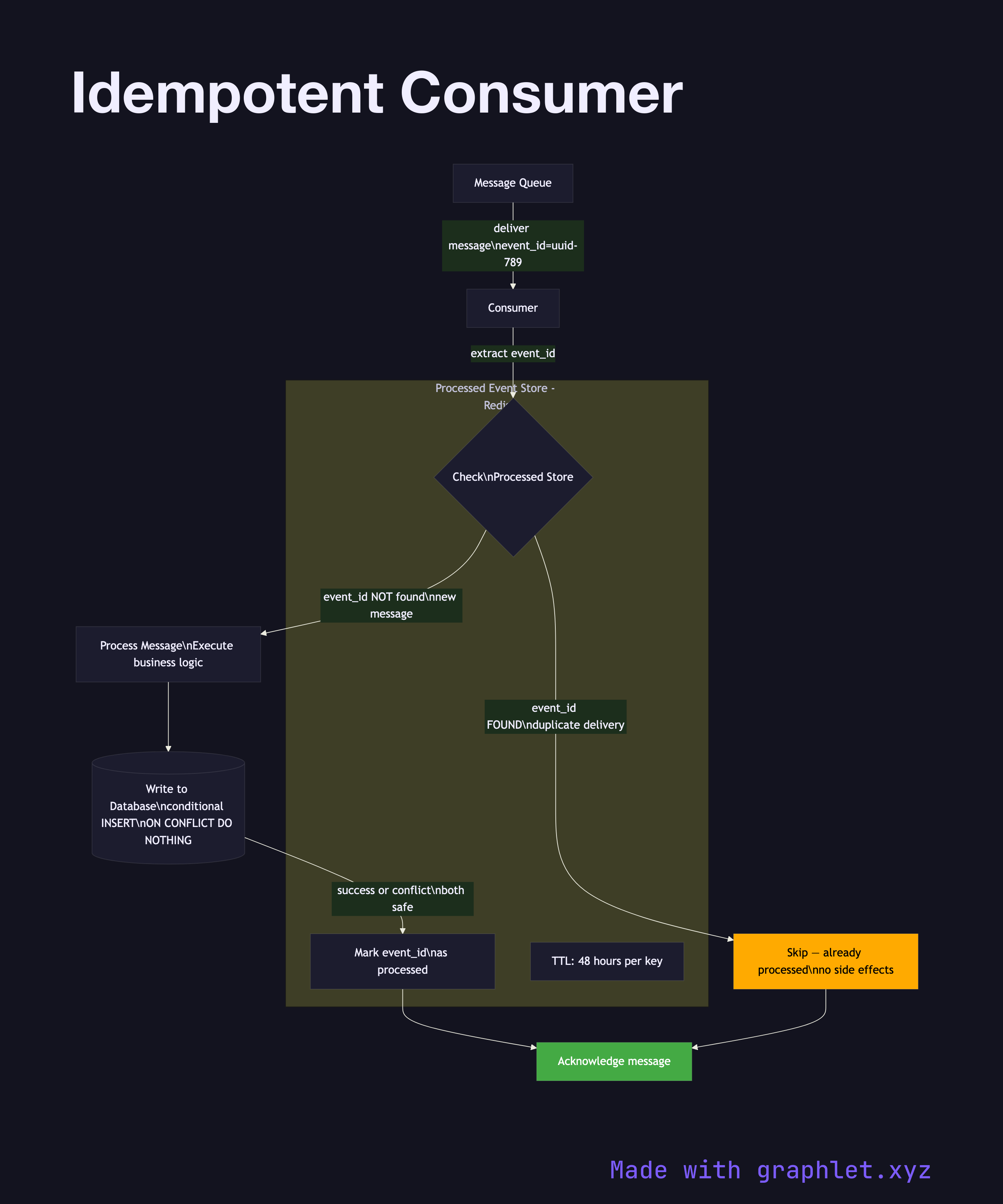
An idempotent consumer is a message handler designed so that processing the same message multiple times produces exactly the same result as processing it once, enabling safe redelivery and retry without risk of duplicate side effects.
In any at-least-once delivery system — which encompasses Kafka, RabbitMQ, SQS, and most managed queuing services — a message may legitimately arrive more than once. This happens during consumer restarts (the consumer replays from the last committed offset), during network timeouts (the broker re-delivers a message whose ack was lost in transit), or after a crash that occurred between processing and committing. Without idempotent consumers, these duplicates translate into duplicate charges, duplicate emails, or inconsistent aggregate state.
Idempotency must be designed at the business logic level, not just the infrastructure level. There are three primary techniques. First, natural idempotency: some operations are inherently idempotent — setting a field to a specific value (UPDATE accounts SET status='verified') is safe to run twice; incrementing a counter is not. Design your data model to prefer set-based operations where possible.
Second, idempotency keys: attach a unique identifier to every message (a UUID or domain key like payment-{order-id}). Before processing, check whether this key has been seen before in a Message Deduplication store. If yes, skip processing and acknowledge. If no, process, then record the key.
Third, conditional writes: use database-level constraints such as INSERT ... ON CONFLICT DO NOTHING or optimistic locking (WHERE version = N) so that duplicate writes fail silently rather than creating duplicate records.
Idempotent consumer design is the application-layer complement to Exactly Once Delivery infrastructure semantics — together they close the gap between at-least-once delivery and true exactly-once behavior.