Refund Processing
A refund is a merchant-initiated reversal of a previously captured payment. Unlike a chargeback — which is cardholder-initiated through the bank — a refund is processed voluntarily by the merchant and follows a simpler, less costly path through the payment network.
A refund is a merchant-initiated reversal of a previously captured payment. Unlike a chargeback — which is cardholder-initiated through the bank — a refund is processed voluntarily by the merchant and follows a simpler, less costly path through the payment network.
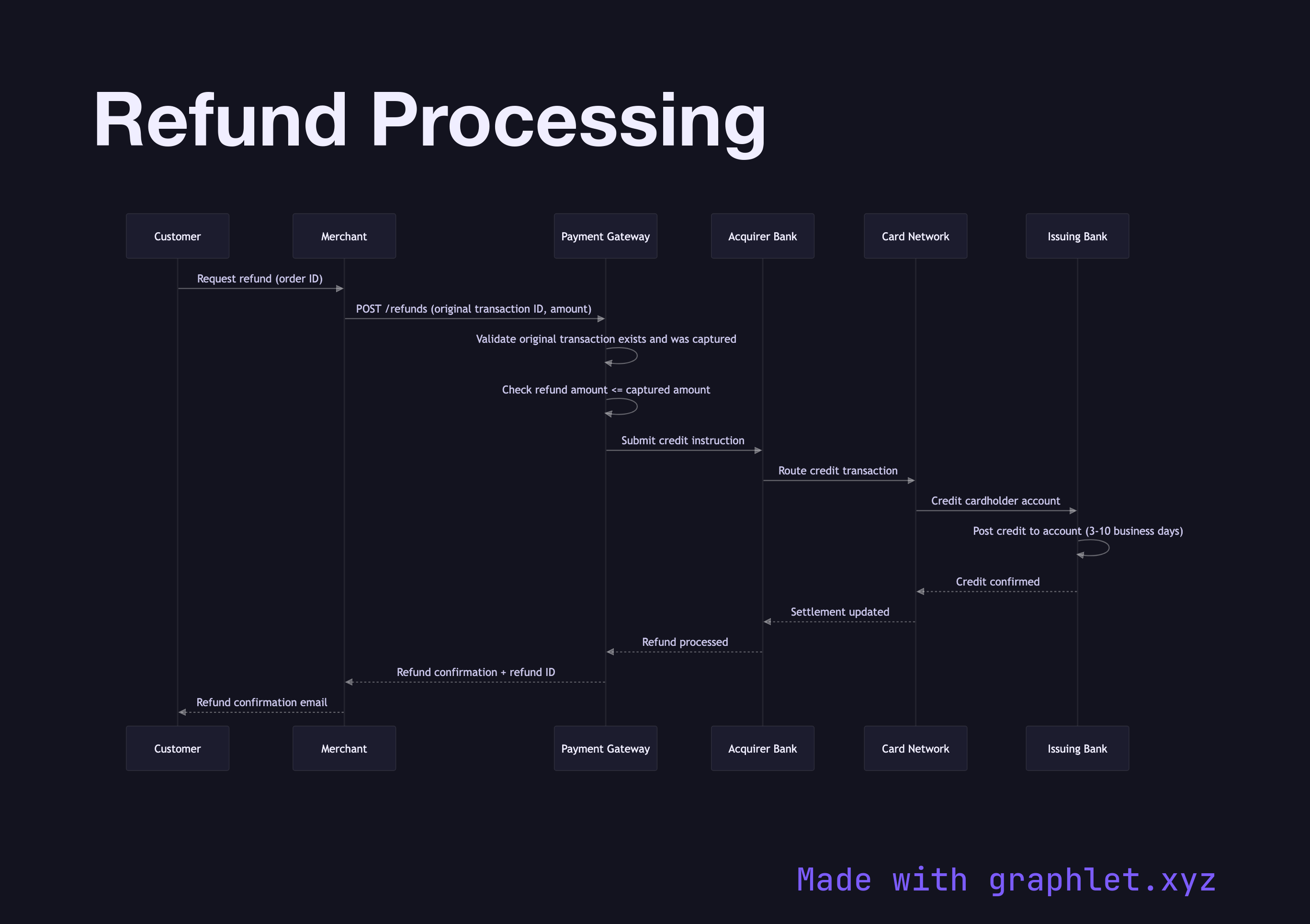
The refund lifecycle starts when a customer requests a return or cancellation. The merchant's system (or a support agent) triggers a refund against a specific original transaction ID. The payment gateway receives the refund request, validates that the original transaction exists and was captured (not just authorized), and checks that the refund amount does not exceed the captured amount. Partial refunds are supported — a merchant might refund only one item from a multi-item order.
The gateway submits a credit instruction to the acquirer referencing the original transaction. The acquirer routes this through the card network as a credit transaction. The card network then credits the issuing bank, which posts the credit to the cardholder's account. The cardholder typically sees the refund in their statement within 3–10 business days, depending on the issuer's processing cycle.
It is important to understand the timing: the acquirer funds the refund from the merchant's settlement account immediately (or batches it), while the actual credit to the cardholder may take several days to appear. This creates a window where the merchant has disbursed the funds but the customer hasn't yet seen the credit — a common source of support tickets.
Refunds bypass the fraud and authorization systems used for new charges. They cannot be declined the way charges can (though they can fail if the original transaction is not found or the card account is closed). For disputed transactions that escalate to formal bank disputes, see Chargeback Handling. Refunds affect settlement calculations covered in Payment Reconciliation.