Internet of Things systems connect physical sensors and actuators to cloud platforms through layered architectures that handle collection, filtering, transmission, and analysis of real-world data. Designing these pipelines reliably requires understanding each stage — from the edge device that reads a temperature sensor to the cloud service that triggers an alert when a threshold is breached.

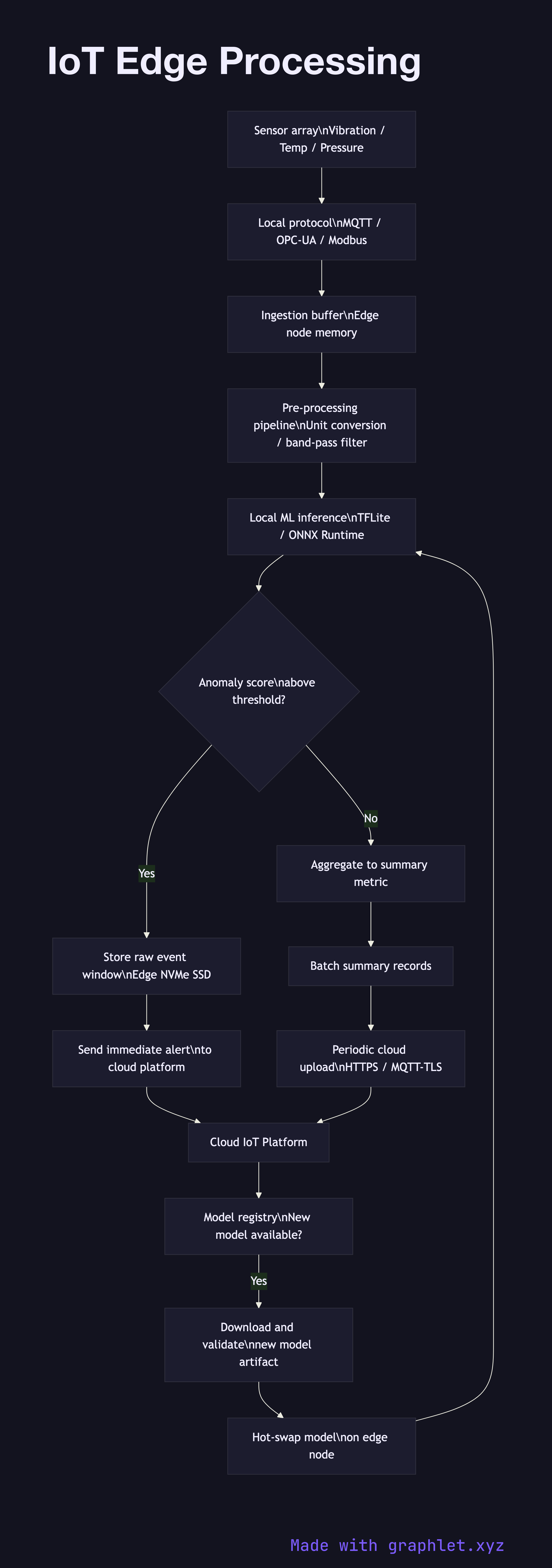
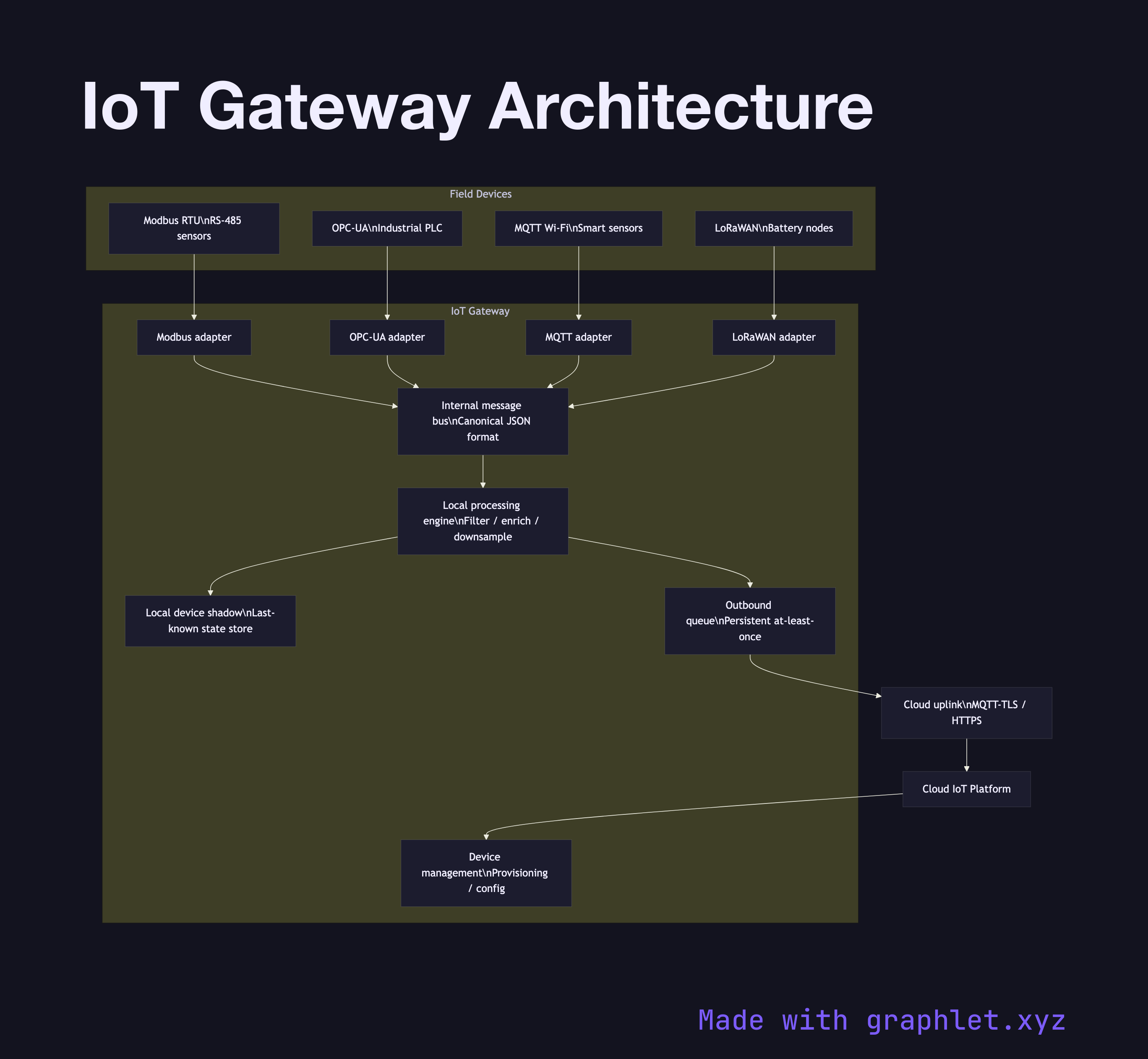
This collection covers the core patterns IoT and embedded developers encounter in production systems. IoT Device Data Flow traces the full journey from raw sensor reading to analytics dashboard. IoT Sensor Data Pipeline focuses on ingestion and preprocessing, while IoT Edge Processing details local filtering and inference before data leaves the device. IoT Gateway Architecture shows how protocol translation and fan-out are handled at the network boundary.

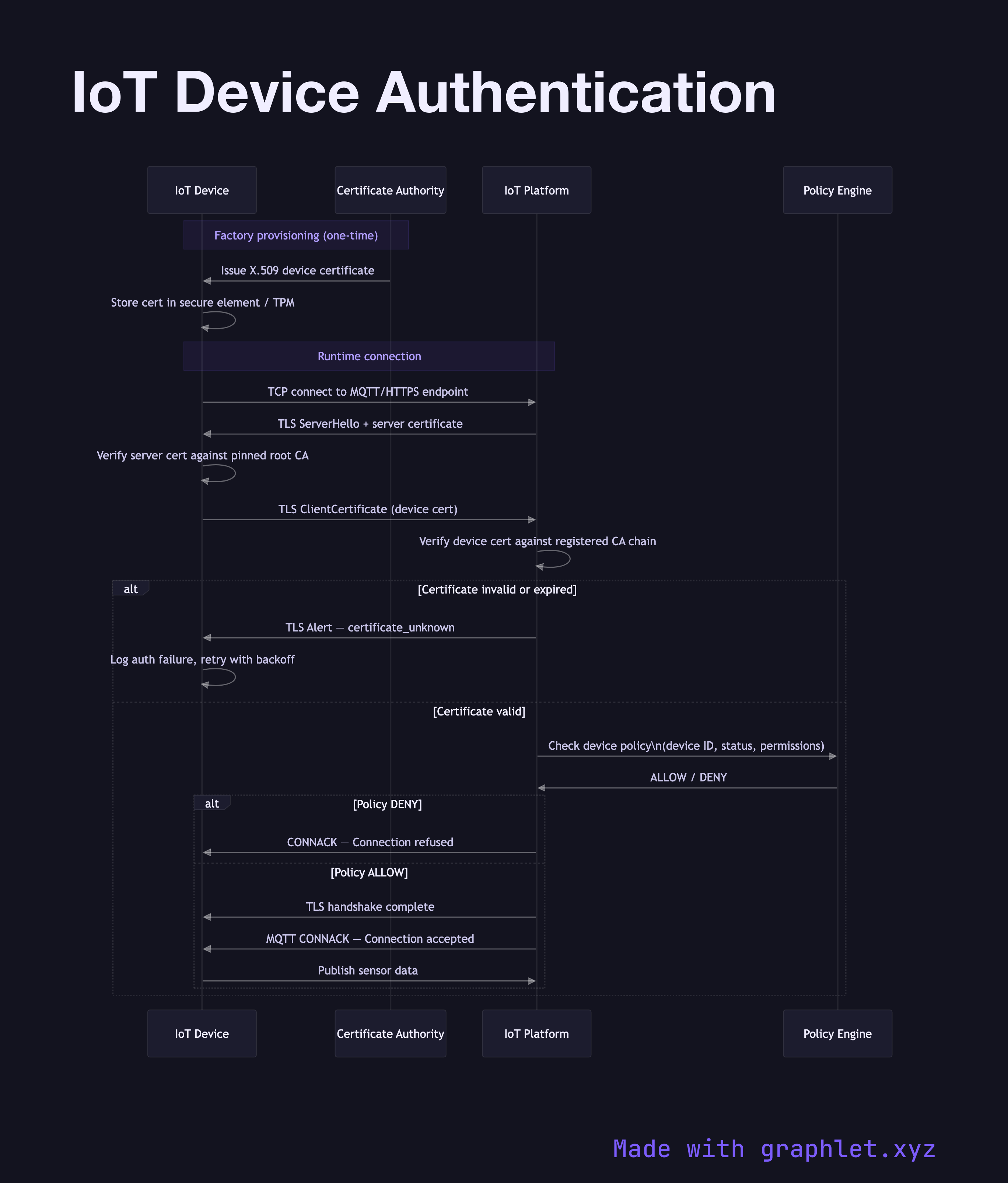
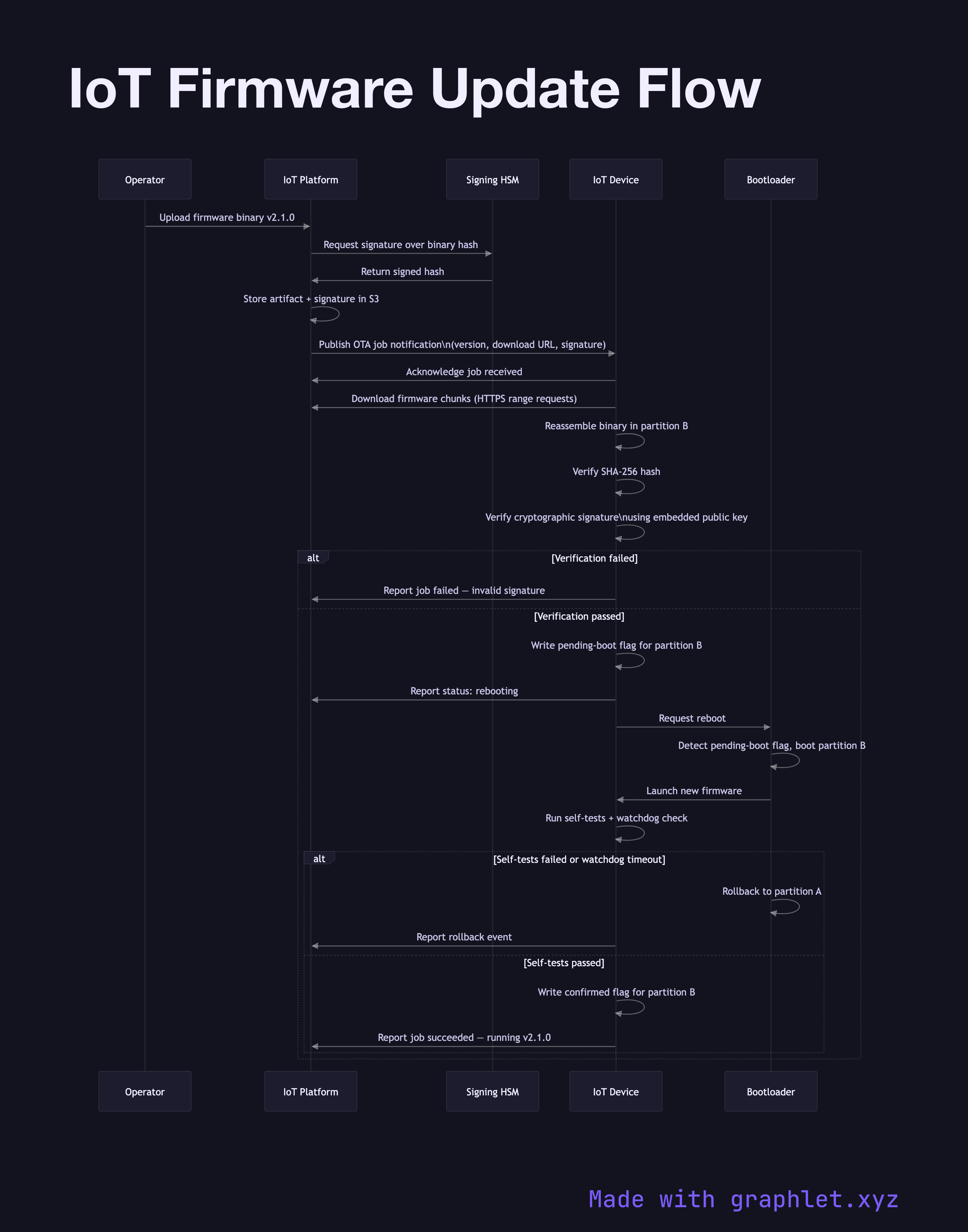
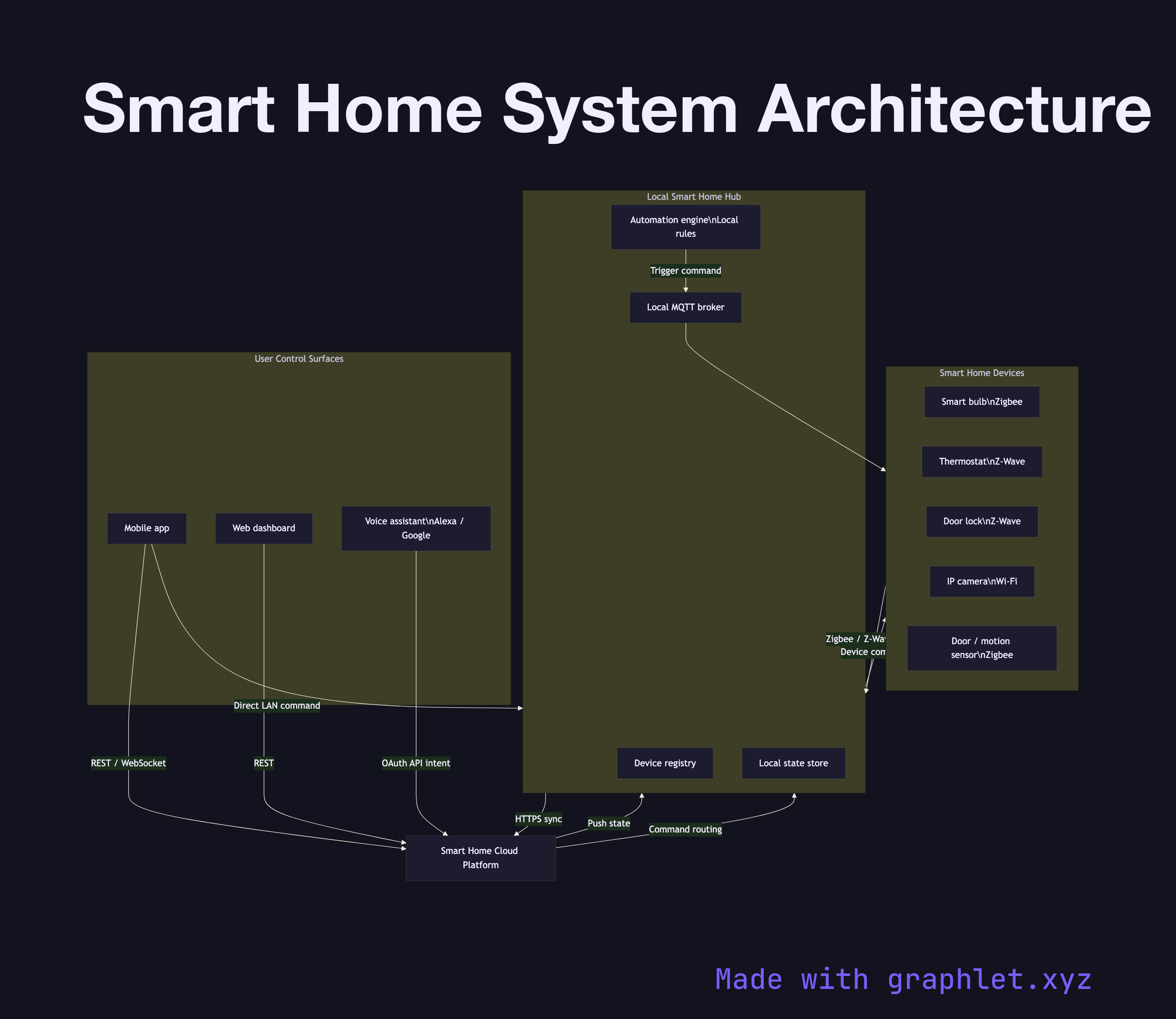
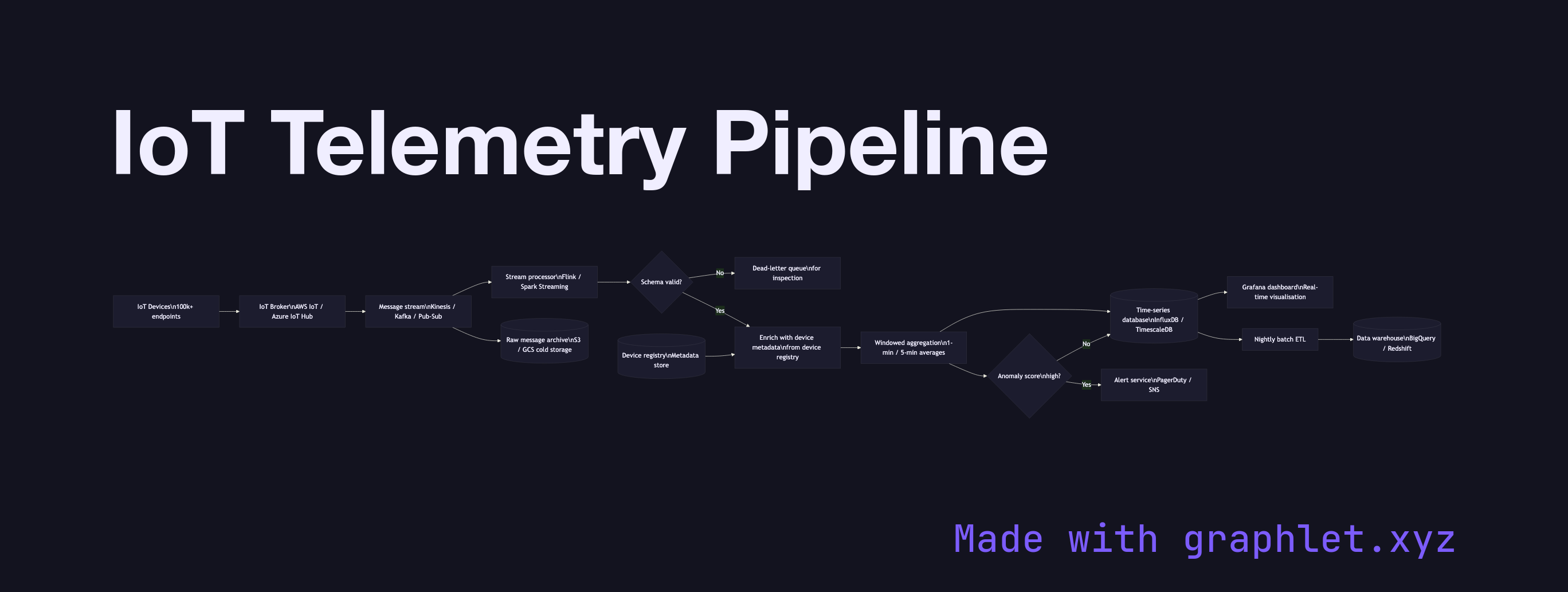
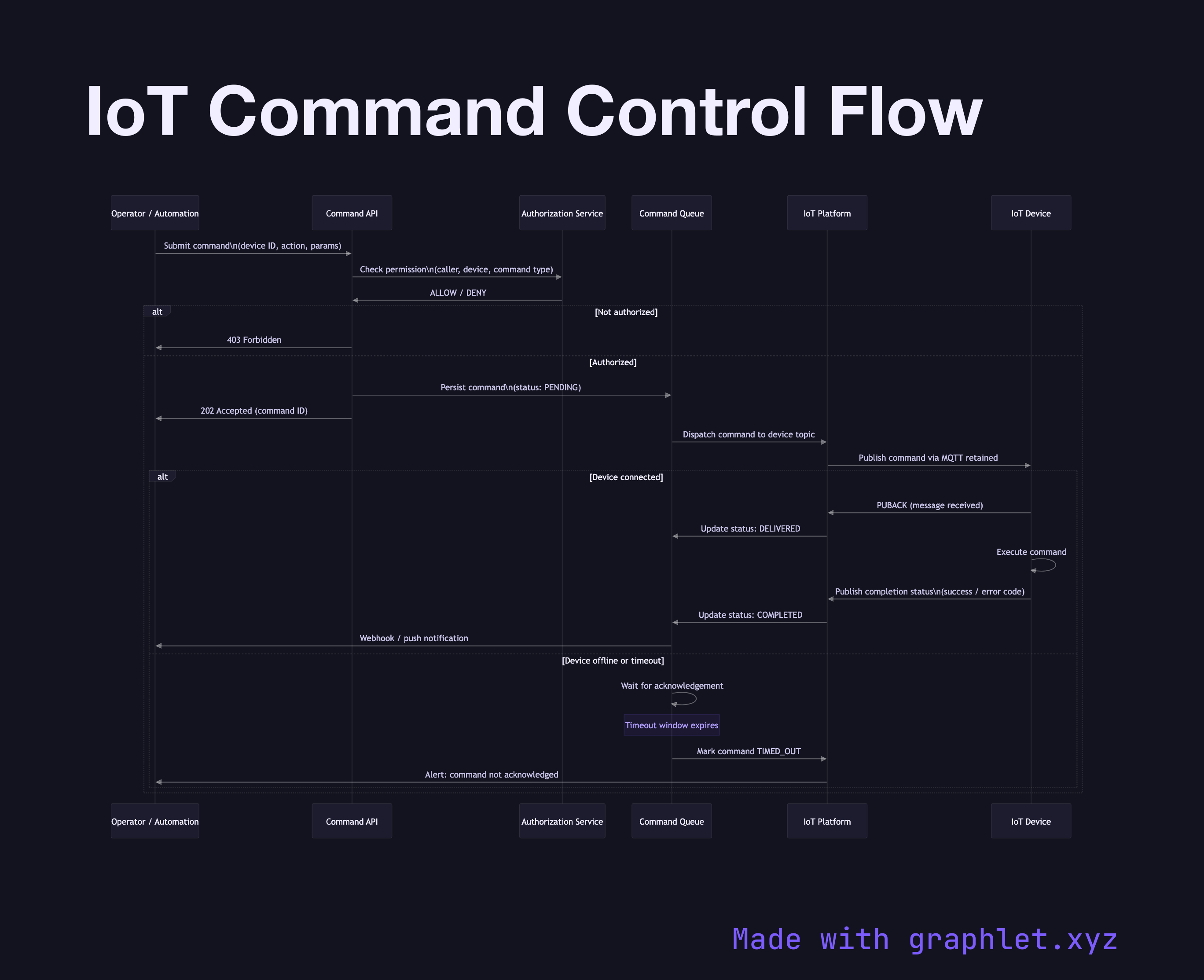
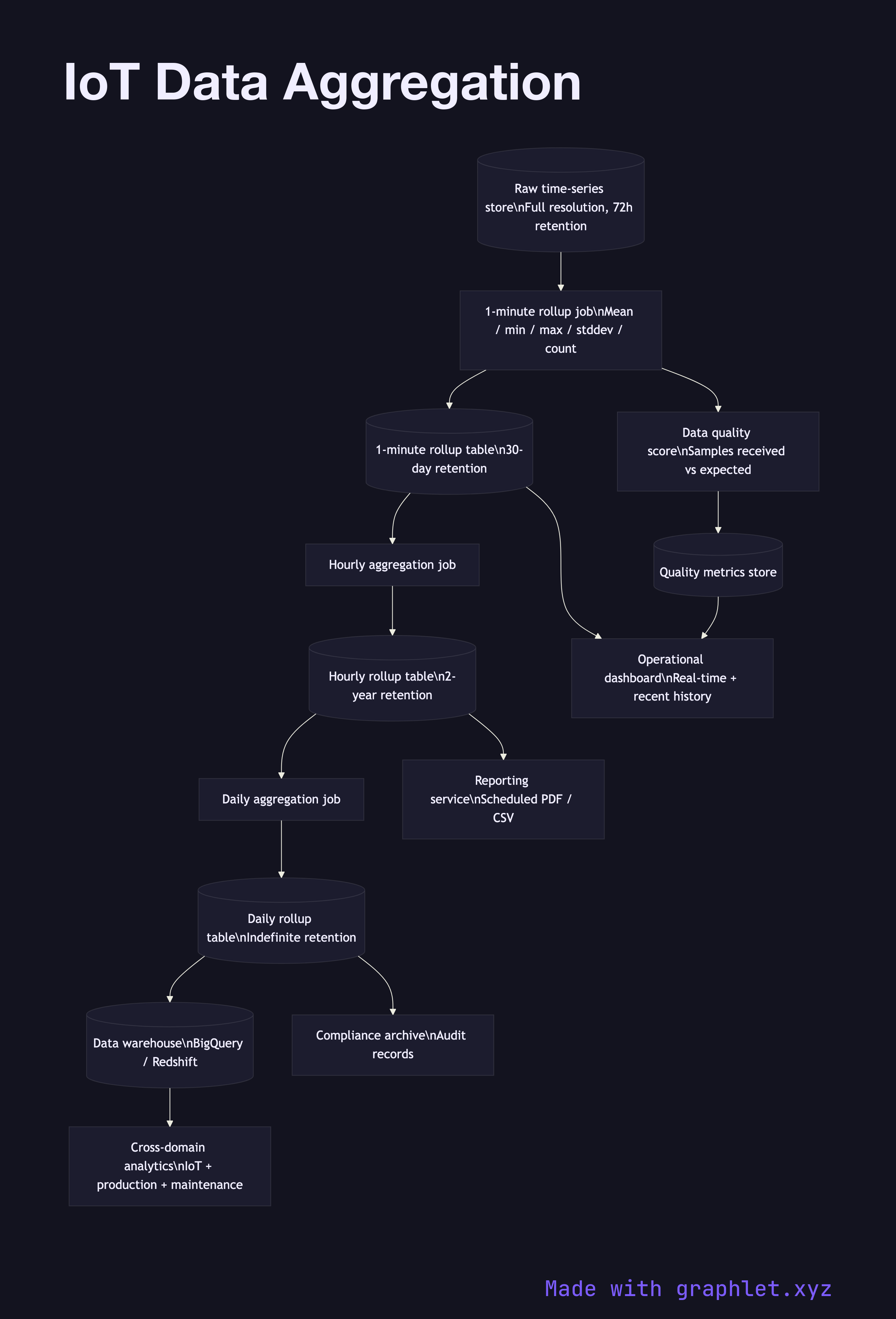
Security and operations are covered by IoT Device Authentication, IoT Firmware Update Flow, and IoT Command Control Flow. For analytics, IoT Telemetry Pipeline and IoT Data Aggregation show how time-series data is collected and rolled up. Smart Home System Architecture illustrates a consumer-facing end-to-end deployment. Every diagram opens in Graphlet for live editing and export.

All diagrams 10 examples
IoT Device Data Flow flowchart diagram
IoT Device Data Flow
flowchart
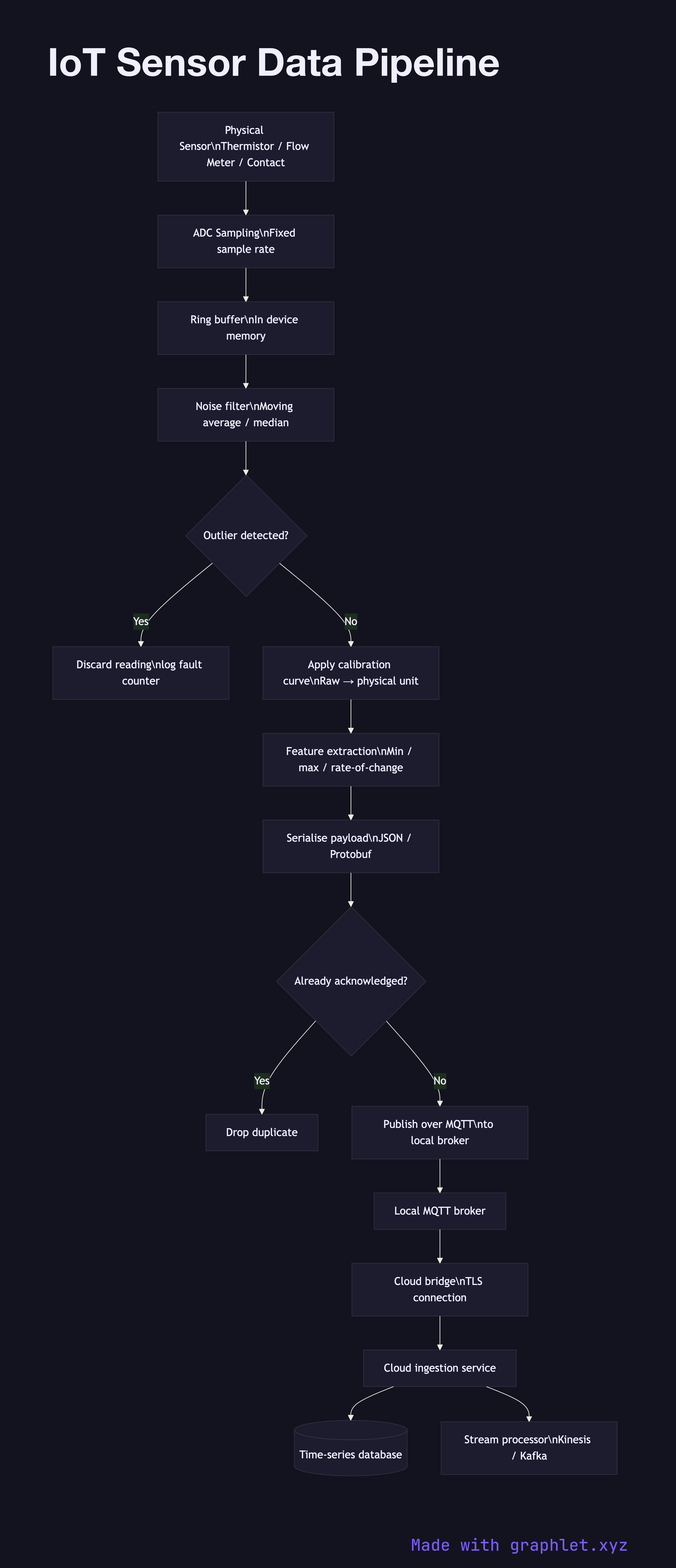
IoT Sensor Data Pipeline flowchart diagram
IoT Sensor Data Pipeline
flowchart
IoT Edge Processing flowchart diagram
IoT Edge Processing
flowchart
IoT Device Authentication sequence diagram
IoT Device Authentication
sequence
IoT Firmware Update Flow sequence diagram
IoT Firmware Update Flow
sequence
Smart Home System Architecture flowchart diagram
Smart Home System Architecture
flowchart
IoT Gateway Architecture flowchart diagram
IoT Gateway Architecture
flowchart
IoT Telemetry Pipeline flowchart diagram
IoT Telemetry Pipeline
flowchart
IoT Command Control Flow sequence diagram
IoT Command Control Flow
sequence
IoT Data Aggregation flowchart diagram
IoT Data Aggregation
flowchart

Frequently asked questions

An IoT architecture diagram is a visual representation of the components in an Internet of Things system — sensors, gateways, message brokers, cloud services, and dashboards — and the data flows connecting them. It helps teams agree on system boundaries, identify bottlenecks, and communicate design decisions across engineering and product disciplines.
Mermaid supports flowchart, sequence, and state diagram syntax that maps naturally to IoT concepts. Define your devices and services as nodes, then use arrows to show data flow or message exchange. Each diagram in this collection includes ready-to-use Mermaid source that you can open in Graphlet and modify without writing code from scratch.
Use a flowchart for end-to-end data flow, gateway architecture, or aggregation pipelines. Use a sequence diagram when message ordering and timing matter — device authentication, command delivery, and OTA firmware updates are natural fits. Use a state diagram to model device lifecycle states such as provisioning, connected, and decommissioned.
The most frequent issues are: assuming the device is always online when designing command flows, forgetting to plan for schema evolution as firmware versions diverge, routing all raw sensor data to the cloud rather than filtering at the edge, and omitting rollback paths in OTA update sequences. The diagrams in this collection address each of these concerns explicitly.
Free online editor
Edit any diagram in Graphlet
Open, fork, and export to SVG or PNG. No sign-up required.
Open Graphlet →